• Skip to primary navigation
  • Skip to main content
  • Skip to primary sidebar
  • Skip to footer

RealClimate

Climate science from climate scientists...

  • Start here
  • Model-Observation Comparisons
  • Miscellaneous Climate Graphics
  • Surface temperature graphics
You are here: Home / Archives for rasmus

About Rasmus Benestad

I am a senior scientist working at the Norwegian Meteorological Institute with a background from physics. My scientific career started with a degree in Physics with Electronics at UMIST in Manchester (UK), cloud micro-physics at New Mexico Tech (USA), and ocean physics at Atmospheric Oceanic and Planetary Physics (AOPP) at Oxford University (UK). Since then, I have also got heavily involved in the field of statistics, thanks to exciting collaborations with several statisticians.

My primary focus at the Norwegian Meteorological Institute has been towards climate change adaptation, empirical-statistical downscaling and anthropogenic climate change, but I have also worked on problems relating to natural climate variations connected to changes in the sun. I have authored two text books on these topics: Solar Activity and Earth's climate (Praxis/Springer) and Empirical-Statistical Downscaling (World Scientific Publishers).

My experience from the climate science community includes several roles: a contributing author on two past IPCC assessment reports, a person of contact (POC) for World Climate Research Programme's (WCRP) CORDEX project, a coordinating lead author on Arctic Monitoring and Assessment Programme's (AMAP) report Adapting Actions in a Changing Arctic (AACA, 2017), a councilor for the European Meteorological society (EMS), a member of the EMS communication and media committee, and part of the advisory board for Oxford Research Encyclopedia on climate. I also chair the professional network within the Norwegian trade union for engineer and natural scientists Tekna Klima, dealing with a diverse range of climate solutions.

A conclusion of the 4th International Polar Year

13 Jun 2010 by rasmus

This week, the “Oslo Science conference” the largest conference ever -it was claimed – was held on polar sciences at Lillestrøm, just outside Oslo. Some of the web-casts from that meeting are worth watching, and I found especially the talk by David Barber (“On Thin Ice: The Arctic and Climate Change”, video link here) both a bit alarming as well as fascinating.

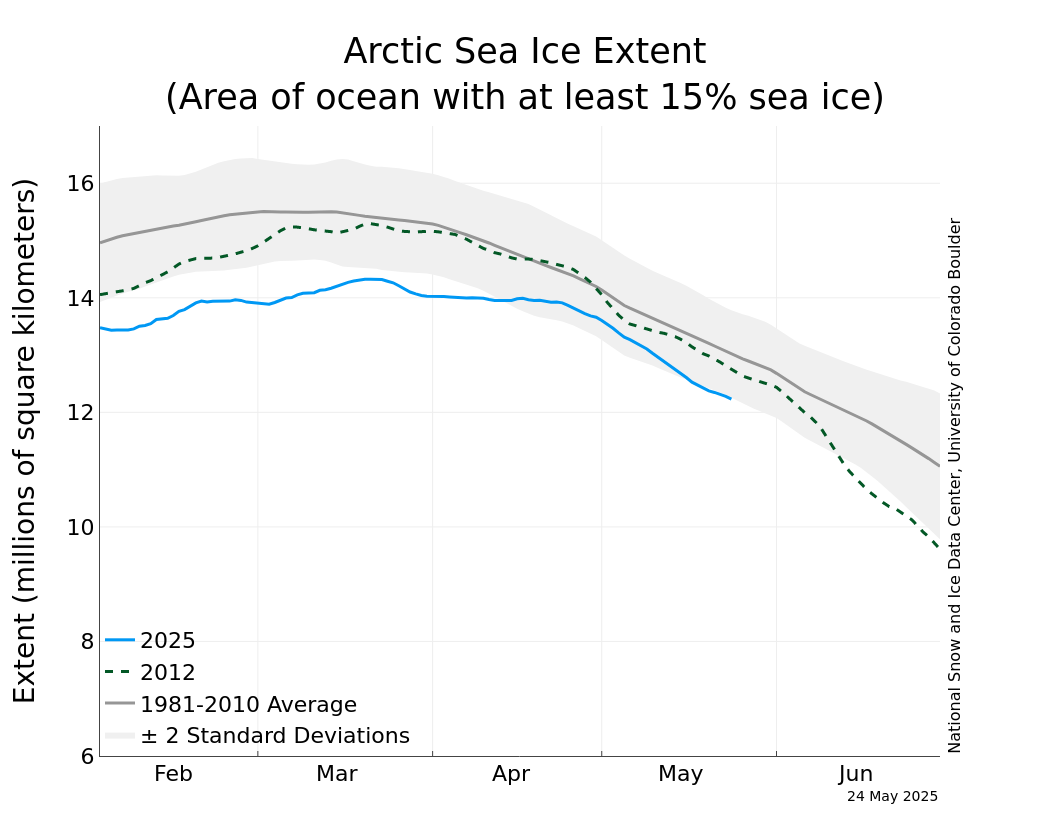
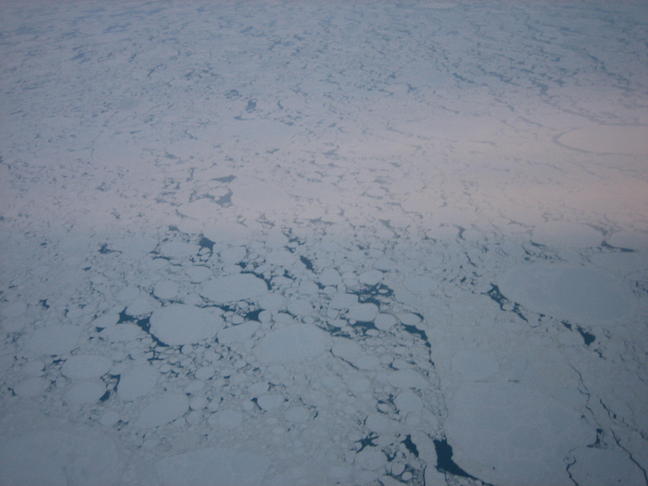
Storms and snow affect sea-ice growth, since a layer of snow on top of the ice insulates against the cold atmosphere and prohibits ice growth. Winds and extra mass can lead to break-up, and the amount of multi-annual ice is lower than expected; it has decayed and ‘rotted’. A mission with the Canadian ice breaker apparently managed to break ice slabs much thicker than expected, due to weaker ice. Also more recent reversals of the Beaufort gyre, unexpected long swells, and new ice on top of clumps of old ice fooling the satellites to think there is more multi-year ice than really the case, are just part of the story. In the mean while, the sea-ice for this season from NSIDC is on a low note.
The main message that I took home from this was that the sea-ice is more important than I previously thought. It appears clearer now that it plays a role in the Arctic amplification – which clearly is really emerging.

Some claim that reduced sea-ice can explain cold winters in the northern hemisphere, but I’m not yet convinced. The cold winters are due to weak Arctic Oscillation, and hence a shift in the air masses bringing frigid polar southwards, and this air is replaced by milder air in the polar region. Hence, a shift in the wind system as well as milder temperatures may favour less Arctic sea-ice.

The Antarctic sea-ice cover has increased on average in the last 30 years, but not everywhere. Both the general increase around East Antarctica and the large decrease off West Antarctica are attributed to the ozone hole and corresponding changes in the Southern Annular Mode (SAM, or the ‘Antarctic Oscillation’), though this probably doesn’t explain what is happening in winter. There is no clear polar amplification observed over Antarctica, such as seen as in the Arctic, and one explanation for this may be that the Antarctic continent has large ice sheets with enormous thermal inertia. But ice core data suggest that there have been amplification there in the past too. Nevertheless, the Arctic is characterized by a polar ocean with retreating sea-ice in the northern hemisphere. In both cases, changing air masses and the winds are important for inter-annual to inter-decadal variations, both in explaining cold winters over Eurasia and sea-ice around Antarctica.

Una traducción en español está disponible aquí.
Una traduzione in italiano è disponibile qui.

Filed Under: Climate Science

Climate and network connections

1 Apr 2010 by rasmus

by Rasmus & Jim

Who would think that Internet, ideas, disease, money, birds, and climate literacy have anything in common? Recent progress on complex systems and network theory suggests that they all can be described in terms of a ‘Levy flight‘. A recent and lengthy paper with the title ‘A study on interconnections between climate related ideas in complex networks’ (Ann. Trans. ICCPRS Soc. 52(3):1647-71; subscription required) by John McVenus argues that new ideas can be traced over the Internet just like dollar bills are traced at Wheresgeorge. Our take on this is that this study muddles things more than clarifying the facts – probably because McVenus tries to explain almost everything.

[Read more…] about Climate and network connections

Filed Under: Climate Science

More on sun-climate relations

9 Mar 2010 by rasmus

Four new papers discuss the relatiosnhip between solar activity and climate: one by Judith Lean (2010) in WIREs Climate Change, a GRL paper by Calogovic et al. (2010), Kulmala et al. (2010), and an on-line preprint by Feulner and Rahmstorf (2010). They all look at different aspects of how changes in solar activity may influence our climate.

[Read more…] about More on sun-climate relations

Filed Under: Climate Science, Sun-earth connections

A mistaken message from IoP?

6 Mar 2010 by rasmus

The Institute of Physics (IoP) recently made a splash in the media through a statement about the implications of the e-mails stolen in the CRU hack. A couple of articles in the Guardian report how this statement was submitted to an inquiry into the CRU hack and provide some background.

[Read more…] about A mistaken message from IoP?

Filed Under: Communicating Climate, RC Forum

Throw your iPhone into the climate debate

19 Feb 2010 by rasmus

Who says that the climate debate is not evolving? According to the daily newspaper the Guardian, a new application (‘app‘) has been written for iPhones that provides a list of climate dissidents’ arguments, and counter arguments based on more legitimate scientific substance. The app is developed by John Cook from ‘Skeptical Science‘. It’s apparently enough to have the climate dissidents up in arms – meaning that it’s likely to have some effect? Some dissidents are now thinking of writing their own app.

Here on RC, we have developed a wiki, to which I also would like to bring the reader’s attention. Furthermore, I want to remind the readers about other useful web sites, listed at our blog roll.

Filed Under: Climate Science

Please, show us your code

17 Dec 2009 by rasmus

The 1991 Science paper by Friis-Christensen & Lassen, work by Henrik Svensmark (Physical Review Letters), and calculations done by Scafetta & West (in the journals Geophysical Research Letters, Journal of Geophysical Research, and Physics Today) have inspired the idea that the recent warming is due to changes in the sun, rather than greenhouse gases.

We have discussed these papers before here on RealClimate (here, here, and here), and I think it’s fair to say that these studies have been fairly influential one way or the other. But has anybody ever seen the details of the methods used, or the data? I believe that a full disclosure of their codes and data would really boost the confidence in their work, if they were sound. So if they believe so strongly that their work is solid, why not more transparency?

[Read more…] about Please, show us your code

Filed Under: Climate Science, RC Forum, skeptics

Something Is X in the State of Denmark

29 Nov 2009 by rasmus

We received a letter with the title ‘Climate Change: The Role of Flawed Science‘ which may be of interest to the wider readership. The author, Peter Laut, is Professor (emeritus) of physics at The Technical University of Denmark and former scientific advisor on climate change for The Danish Energy Agency. He has long been a critic of the hypothesis that solar activity dominates the global warming trend, and has been involved in a series of heated public debates in Denmark. Even though most of his arguments concern scientific issues, such as data handling, and arithmetic errors, he also has much to say about the way that the debate about climate change has been conducted. It’s worth noting that he sent us this letter before the “CRU email” controversy broke out, so his criticism of the IPCC for being too even handed, is ironic and timely.

Update – the link in the letter is now fixed. -rasmus

Filed Under: Climate Science, Communicating Climate, Sun-earth connections

A problem of multiplicity

20 Nov 2009 by rasmus

One thing a scientist doesn’t want to mess up is the problem of multiplicity (also known as ‘field significance‘). It’s just like rolling a die 600 times, and then getting excited about getting roughly 100 sixes. However, sometimes it’s much more subtle than just rolling dice.

This problem seems to be an issue in a recent by paper with the title ‘Evidence for solar forcing in variability of temperatures and pressures in Europe‘ by Le Mouel et al. (2009) in the Journal of Atmospheric and Solar-Terrestrial Physics.

[Read more…] about A problem of multiplicity

Filed Under: Climate Science

Why the continued interest?

9 Oct 2009 by rasmus

I believe the idea that galactic cosmic rays (GCR) play a role for the present global warming is unlikely to fade soon, despite a growing number of scientific arguments that normally would falsify a hypothesis and lay it dead (see links here and here). Despite all the arguments against the role of GCR, there was a solicited talk about ‘cosmoclimatology’ at the European Meteorological Society’s (EMS) annual meeting in Toulouse. Henrik Svensmark is further invited by the Norwegian Academy of Science and Letters (NASL) to provide an introduction to their seminar on climate. So why is the GCR-hypothesis still perceived as an interesting explanation?

[Read more…] about Why the continued interest?

Filed Under: Climate Science, Sun-earth connections

Climate Services

9 Sep 2009 by rasmus

I recently attended the World Climate Conference-3 (WCC-3), hosted by the World Meteorological Organization (WMO) in Geneva. Most of the talk was of providing “climate services” (CS) and coordinating these globally. But what are climate services, and how much of what was envisaged is scientifically doable?
[Read more…] about Climate Services

Filed Under: Climate Science, RC Forum, Reporting on climate

  • « Go to Previous Page
  • Page 1
  • Interim pages omitted …
  • Page 10
  • Page 11
  • Page 12
  • Page 13
  • Page 14
  • Interim pages omitted …
  • Page 17
  • Go to Next Page »

Primary Sidebar

Search

Search for:

Email Notification

get new posts sent to you automatically (free)
Loading

Recent Posts

  • This new El Niño is different
  • Unforced Variations: July 2026
  • Unforced Variations: June 2026
  • “The Arctic Council is not dead”
  • Scenarios, schmenarios…
  • Unforced Variations: May 2026

Our Books

Book covers
This list of books since 2005 (in reverse chronological order) that we have been involved in, accompanied by the publisher’s official description, and some comments of independent reviewers of the work.
All Books >>

Recent Comments

  • MA Rodger on Unforced Variations: July 2026
  • MA Rodger on Unforced Variations: July 2026
  • John Pollack on Unforced Variations: July 2026
  • John Pollack on Unforced Variations: July 2026
  • EarthClimate on Unforced Variations: July 2026
  • Ray Ladbury on Unforced Variations: July 2026
  • Piotr on Unforced Variations: July 2026
  • EarthClimate on This new El Niño is different
  • Piotr on Unforced Variations: July 2026
  • EarthClimate on This new El Niño is different
  • Keith Woollard on This new El Niño is different
  • EarthClimate on This new El Niño is different
  • Piotr on This new El Niño is different
  • Piotr on This new El Niño is different
  • Piotr on This new El Niño is different
  • E. Schaffer on Unforced Variations: July 2026
  • E. Schaffer on Unforced Variations: July 2026
  • E. Schaffer on Unforced Variations: July 2026
  • Tomáš Kalisz on Unforced Variations: July 2026
  • E. Schaffer on Unforced Variations: July 2026
  • EarthClimate on This new El Niño is different
  • Ray Ladbury on Unforced Variations: July 2026
  • Tomáš Kalisz on Unforced Variations: July 2026
  • Tomáš Kalisz on Unforced Variations: July 2026
  • Tomáš Kalisz on Unforced Variations: July 2026
  • Piotr on Unforced Variations: July 2026
  • Barton Paul Levenson on Unforced Variations: July 2026
  • Barton Paul Levenson on Unforced Variations: July 2026
  • JCM on Unforced Variations: July 2026
  • Piotr on Unforced Variations: July 2026

Footer

ABOUT

  • About
  • Translations
  • Privacy Policy
  • Contact Page
  • Login

DATA AND GRAPHICS

  • Data Sources
  • Model-Observation Comparisons
  • Surface temperature graphics
  • Miscellaneous Climate Graphics

INDEX

  • Acronym index
  • Index
  • Archives
  • Contributors

Realclimate Stats

1,410 posts

15 pages

252,057 comments

Copyright © 2026 · RealClimate is a commentary site on climate science by working climate scientists for the interested public and journalists.