• Skip to primary navigation
  • Skip to main content
  • Skip to primary sidebar
  • Skip to footer

RealClimate

Climate science from climate scientists...

  • Start here
  • Model-Observation Comparisons
  • Miscellaneous Climate Graphics
  • Surface temperature graphics
You are here: Home / Archives for Communicating Climate

Communicating Climate

2020 vision

29 Dec 2020 by Gavin

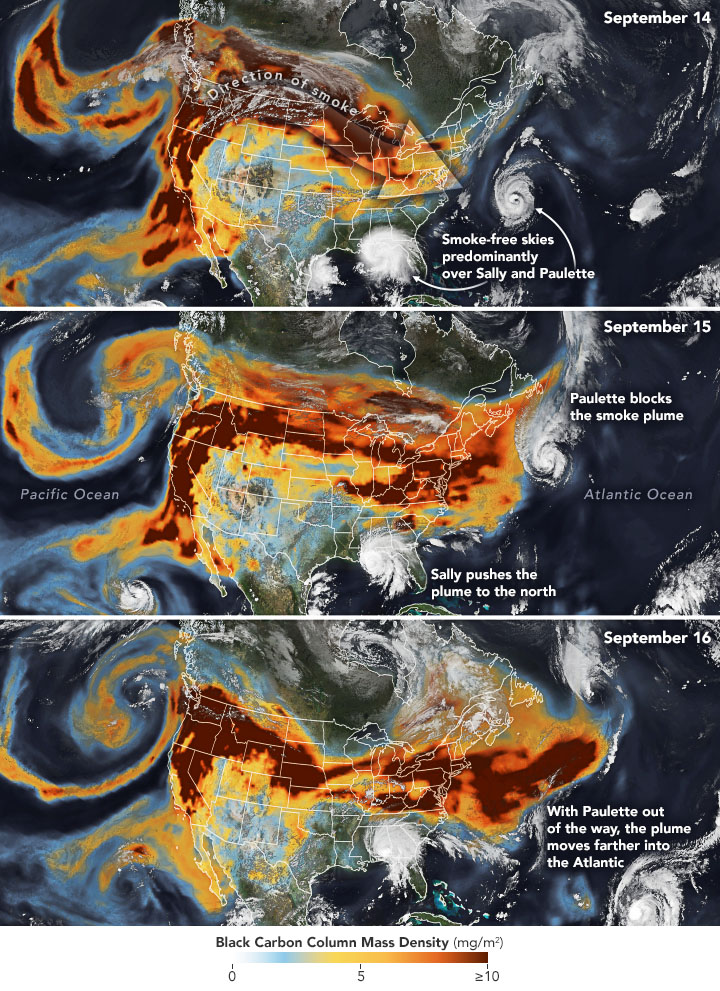
A meeting of smoke and storms (NASA Earth Observatory)

No-one needs another litany of all the terrible things that happened this year, but there are three areas relevant to climate science that are worth thinking about:

  • What actually happened in climate/weather (and how they can be teased apart). There is a good summary on the BBC radio Discover program covering wildfires, heat waves, Arctic sea ice, the hurricane season, etc. featuring Mike Mann, Nerlie Abram, Sarah Perkins-Kilpatrick, Steve Vavrus and others. In particular, there were also some new analyses of hurricanes (their rapid intensification, slowing, greater precipitation levels etc.), as well as the expanding season for tropical storms that may have climate change components. Yale Climate Connections also has a good summary.
  • The accumulation of CMIP6 results. We discussed some aspects of these results extensively – notably the increased spread in Equilibrium Climate Sensitivity, but there is a lot more work to be done on analyzing the still-growing database that will dominate the discussion of climate projections for the next few years. Of particular note will be the need for more sophisticated analyses of these model simulations that take into account observational constraints on ECS and a wider range of future scenarios (beyond just the SSP marker scenarios that were used in CMIP). These issues will be key for the upcoming IPCC 6th Assessment Report and the next National Climate Assessment.
  • The intersection of climate and Covid-19.
    • The direct connections are clear – massive changes in emissions of aerosols, short-lived polluting gases (like NOx) and CO2 – mainly from reductions in transportation. Initial results demonstrated a clear connection between cleaner air and the pandemic-related restrictions and behavioural changes, but so far the impacts on temperature or other climate variables appear to be too small to detect (Freidlingstein et al, 2020). The impact on global CO2 emissions (LeQuere et al, 2020) has been large (about 10% globally) – but not enough to stop CO2 concentrations from continuing to rise (that would need a reduction of more like 70-80%). Since the impact from CO2 is cumulative this won’t make a big difference in future temperatures unless it is sustained through post-pandemic changes.
    • The metaphorical connections are also clear. The instant rise of corona virus-denialism, the propagation of fringe viewpoints from once notable scientists, petitions to undermine mainstream epidemiology, politicized science communications, and the difficulty in matching policy to science (even for politicians who want to just ‘follow the science’), all seem instantly recognizable from a climate change perspective. The notion that climate change was a uniquely wicked problem (because of it’s long term and global nature) has evaporated as quickly as John Ioannidis’ credibility.

I need to take time to note that there has been human toll of Covid-19 on climate science, ranging from the famous (John Houghton) to the families of people you never hear about in the press but whose work underpins the data collection, analysis and understanding we all rely on. This was/is a singular tragedy.

With the La Niña now peaking in the tropical Pacific, we can expect a slightly cooler year in 2021 and perhaps a different character of weather events, though the long-term trends will persist. My hope is that the cracks in the system that 2020 has revealed (across a swathe of issues) can serve as an motivation to improve resilience, equity and planning, across the board. That might well be the most important climate impact of all.

A happier new year to you all.

References

  1. P.M. Forster, H.I. Forster, M.J. Evans, M.J. Gidden, C.D. Jones, C.A. Keller, R.D. Lamboll, C.L. Quéré, J. Rogelj, D. Rosen, C. Schleussner, T.B. Richardson, C.J. Smith, and S.T. Turnock, "Current and future global climate impacts resulting from COVID-19", Nature Climate Change, vol. 10, pp. 913-919, 2020. http://dx.doi.org/10.1038/s41558-020-0883-0
  2. C. Le Quéré, R.B. Jackson, M.W. Jones, A.J.P. Smith, S. Abernethy, R.M. Andrew, A.J. De-Gol, D.R. Willis, Y. Shan, J.G. Canadell, P. Friedlingstein, F. Creutzig, and G.P. Peters, "Temporary reduction in daily global CO2 emissions during the COVID-19 forced confinement", Nature Climate Change, vol. 10, pp. 647-653, 2020. http://dx.doi.org/10.1038/s41558-020-0797-x

Filed Under: Climate impacts, Climate modelling, Climate Science, coronavirus, El Nino, Hurricanes, skeptics

Denial and Alarmism in the Near-Term Extinction and Collapse Debate

20 Aug 2020 by group

Guest article by Alastair McIntosh,  honorary professor in the College of Social Sciences at the University of Glasgow in Scotland. This is an excerpt from his new book, Riders on the Storm: The Climate Crisis and the Survival of Being

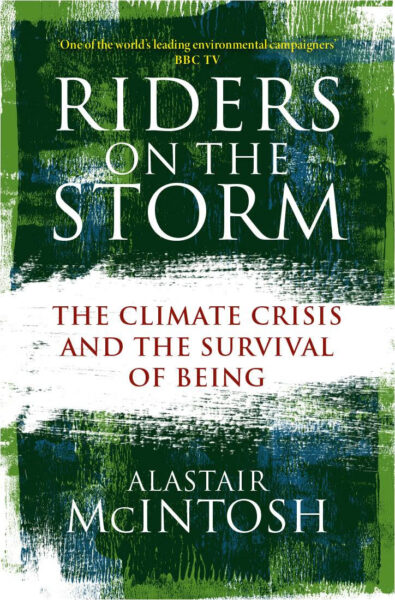
cover art for Riders on the StormMostly, we only know what we think we know about climate science because of the climate science. I have had many run-ins with denialists, contrarians or climate change dismissives as they are variously called. Over the past two years especially, concern has also moved to the other end of the spectrum, to alarmism. Both ends, while the latter has been more thinly tapered, can represent forms of denial. In this abridged adaptation I will start with denialism, but round on the more recent friendly fire on science that has emerged in alarmism.
[Read more…] about Denial and Alarmism in the Near-Term Extinction and Collapse Debate

Filed Under: Arctic and Antarctic, Climate modelling, Climate Science, Communicating Climate, Solutions

BAU wow wow

30 Jan 2020 by Gavin

How should we discuss scenarios of future emissions? What is the range of scenarios we should explore? These are constant issues in climate modeling and policy discussions, and need to be reassessed every few years as knowledge improves.

I discussed some of this in a post on worst case scenarios a few months ago, but the issue has gained more prominence with a commentary by Zeke Hausfather and Glen Peters in Nature this week (which itself partially derives from ongoing twitter arguments which I won’t link to because there are only so many rabbit holes that you want to fall into).

My brief response to this is here though:

How to judge the importance of scientific critiques? Use a necessary edits scale:

4* Big deal: All papers to be rewritten from scratch
3* Important: Major revisions in many papers
2* Notable: Some sections reframed
1* Inconsequential: A sentence or two edited

— Gavin Schmidt (@ClimateOfGavin) January 30, 2020

Mike Mann has a short discussion on this as well. But there are many different perspectives around – ranging from the merely posturing to the credible and constructive. The bigger questions are certainly worth discussing, but if the upshot of the current focus is that we just stop using the term ‘business-as-usual’ (as was suggested in the last IPCC report), then that is fine with me, but just not very substantive.

References

  1. Z. Hausfather, and G.P. Peters, "Emissions – the ‘business as usual’ story is misleading", Nature, vol. 577, pp. 618-620, 2020. http://dx.doi.org/10.1038/d41586-020-00177-3

Filed Under: Climate impacts, Climate modelling, Climate Science, Communicating Climate, IPCC, Scientific practice

Sensitive But Unclassified

6 Nov 2019 by Gavin

The US federal government goes to quite a lot of effort to (mostly successfully) keep sensitive but unclassified (SBU) information (like personal data) out of the hands of people who would abuse it. But when it comes to the latest climate models, quite a few are SBU as well.

[Read more…] about Sensitive But Unclassified

Filed Under: Climate modelling, Climate Science, Communicating Climate, Instrumental Record, IPCC

Just the facts?

9 Aug 2019 by Gavin

In the wake of the appalling mass shootings last weekend, Neil DeGrasse Tyson (the pre-eminent scientist/communicator in the US) tweeted some facts that were, let’s just say, not well received (and for which he kind of apologised). At least one of the facts he tweeted about was incorrect (deaths by medical errors are far smaller). However, even if it had been correct, the overall response would have been the same, because the reaction was not driven by the specifics of what was said, but rather by the implied message of the context in which it was said. This is a key feature (or bug) of communications in a politicized environment, and one that continues to trip up people who are experienced enough to know better.

[Read more…] about Just the facts?

Filed Under: Climate Science, Communicating Climate, In the News, Scientific practice

Absence and Evidence

25 Jun 2019 by group

Guest commentary by Michael Tobis, a retired climate scientist. He is a software developer and science writer living in Ottawa, Ontario.

A recent opinion piece by economist Ross McKitrick in the Financial Post, which attracted considerable attention in Canada, carried the provocative headline “This scientist proved climate change isn’t causing extreme weather – so politicians attacked”.

In fact, the scientist referenced in the headline, Roger Pielke Jr., proved no such thing. He examined some data, but he did not find compelling evidence regarding whether or not human influence is causing or influencing extreme events.

Should such a commonplace failure be broadly promoted as a decisive result that merits public interest?

[Read more…] about Absence and Evidence

Filed Under: Climate impacts, Climate Science, Communicating Climate, Hurricanes, IPCC

Koonin’s case for yet another review of climate science

15 Jun 2019 by Gavin

We watch long YouTube videos so you don’t have to.

In the seemingly endless deliberations on whether there should be a ‘red team’ exercise to review various climate science reports, Scott Waldman reported last week that the original architect of the idea, Steve Koonin, had given a talk on touching on the topic at Purdue University in Indiana last month. Since the talk is online, I thought it might be worth a viewing.

[Spoiler alert. It wasn’t].

[Read more…] about Koonin’s case for yet another review of climate science

Filed Under: Climate modelling, Climate Science, In the News, Instrumental Record, IPCC, Scientific practice, skeptics

The best case for worst case scenarios

26 Feb 2019 by Gavin

The “end of the world” or “good for you” are the two least likely among the spectrum of potential outcomes.

Stephen Schneider

Scientists have been looking at best, middling and worst case scenarios for anthropogenic climate change for decades. For instance, Stephen Schneider himself took a turn back in 2009. And others have postulated both far more rosy and far more catastrophic possibilities as well (with somewhat variable evidentiary bases).

[Read more…] about The best case for worst case scenarios

References

  1. S. Schneider, "The worst-case scenario", Nature, vol. 458, pp. 1104-1105, 2009. http://dx.doi.org/10.1038/4581104a

Filed Under: Climate impacts, Climate modelling, Climate Science, Communicating Climate, IPCC, Reporting on climate, Scientific practice

Decluttering

21 Jan 2019 by Gavin

Given some unexpected down time this month (and maybe next month too!), I’ve been trying to go through key old posts on this site. The basic idea is to update links to other sites, references and figures that over the years have died (site domains that were abandoned, site redesigns, deliberate deletions etc.). Most notably, the IPCC website recently broke all the existing links to elements of the reports which we had referenced in hundreds of places. Thanks guys!

Some folk have been notifying us of issues they found (thanks Marcus!) and I’ve been fixing those as they come up, but obviously there are more. Links to old blog posts from Deltoid, Scienceblogs, Pielke Sr. or Prometheus generally don’t work anymore though they can sometimes be found on the wayback machine. It turns out a lot has changed since 2004 and many hotlinked images in particular have disappeared.

It’s obviously not worth finding replacements for every dead link, but digital uncluttering and fixing up is useful. So, please use this thread to notify us of any useful fixes we can make (and if you have an updated link,, that’d be perfect). Additionally, please let us know if any of the old content is still useful or interesting to you. We know there is still substantial traffic to the back catalog, so maybe it should be highlighted in some way?

To those of you who might ask whether blogging still brings me joy… of course it does!

Filed Under: Climate Science, Communicating Climate

Let’s check your temperature

26 Dec 2018 by rasmus

The underlying mission of my job is to safeguard lives and property through climate change adaptation based on science. In other words, to help society to prepare itself for risks connected with more extreme rainfall and temperatures.

For many people, “climate” may seem to be an abstract concept. I have had many conversations about climate, and then realised that people often have different interpretations. In my mind, climate is the same as weather statistics (which I realise can be quite abstract to many).

To avoid miscommunication, I want to make sure that we are on the same page when I discuss climate. Maybe it helps if I talk about more familiar and specific aspects, such as the temperature, rainfall, snow, or wind?

[Read more…] about Let’s check your temperature

Filed Under: Climate Science, climate services, Communicating Climate, statistics, Supplemental data

  • « Go to Previous Page
  • Page 1
  • Interim pages omitted …
  • Page 3
  • Page 4
  • Page 5
  • Page 6
  • Page 7
  • Interim pages omitted …
  • Page 29
  • Go to Next Page »

Primary Sidebar

Search

Search for:

Email Notification

get new posts sent to you automatically (free)
Loading

Recent Posts

  • Unforced Variations: Dec 2025
  • Who should pay?
  • Site updates etc.
  • Raising Climate Literacy
  • Unforced variations: Nov 2025
  • High-resolution ‘fingerprint’ images reveal a weakening Atlantic Ocean circulation (AMOC)

Our Books

Book covers
This list of books since 2005 (in reverse chronological order) that we have been involved in, accompanied by the publisher’s official description, and some comments of independent reviewers of the work.
All Books >>

Recent Comments

  • Ron R. on Who should pay?
  • Atomsk's Sanakan on Raising Climate Literacy
  • Neurodivergent on Unforced variations: Nov 2025
  • Neurodivergent on Unforced variations: Nov 2025
  • Ray Ladbury on Who should pay?
  • Yebo Kandu on Raising Climate Literacy
  • Atomsk’s Sanakan on Unforced variations: Nov 2025
  • Kevin McKinney on Who should pay?
  • Kevin McKinney on Who should pay?
  • Barry E Finch on Unforced Variations: Dec 2025
  • Barry E Finch on Unforced Variations: Dec 2025
  • Barry E Finch on Unforced variations: Nov 2025
  • Barry E Finch on Unforced variations: Nov 2025
  • Barton Paul Levenson on Who should pay?
  • MA Rodger on Unforced Variations: Dec 2025
  • Paul Pukite (@whut) on Unforced Variations: Dec 2025
  • Mr. Know It All on Who should pay?
  • patrick o twentyseven on Who should pay?
  • Eddy on Raising Climate Literacy
  • patrick o twentyseven on Who should pay?
  • patrick o twentyseven on Who should pay?
  • Piotr on Who should pay?
  • Tomáš Kalisz on Unforced variations: Nov 2025
  • Nigelj on Who should pay?
  • Nigelj on Who should pay?
  • patrick o twentyseven on Who should pay?
  • Radge Havers on Who should pay?
  • Ray Ladbury on Who should pay?
  • Ron R. on Who should pay?
  • Barry E Finch on Unforced variations: Nov 2025

Footer

ABOUT

  • About
  • Translations
  • Privacy Policy
  • Contact Page
  • Login

DATA AND GRAPHICS

  • Data Sources
  • Model-Observation Comparisons
  • Surface temperature graphics
  • Miscellaneous Climate Graphics

INDEX

  • Acronym index
  • Index
  • Archives
  • Contributors

Realclimate Stats

1,389 posts

15 pages

248,731 comments

Copyright © 2025 · RealClimate is a commentary site on climate science by working climate scientists for the interested public and journalists.